Here's How I Change My Own Oil in a Parking Space, No Jack, No Ramps, Ten Minutes, Standing Up.
I spent four years telling myself I was just bad at keeping up with maintenance. I wasn't. Here's what I found.
I spent four years blaming myself. It was never about discipline.
If you change your own oil…
If you've got a jack, a set of ramps, a drain pan and a stack of empty jugs in the corner somewhere…
If you've ever looked at the sticker in the corner of your windshield, done the math, and realised you're three thousand miles past it…
Then what I'm about to tell you might be the most useful thing you read this year.
Because your oil changes aren't sliding because you're lazy. Not your schedule. Not your discipline. Not the brand of oil you buy.
The oil is fine. The filter is fine. The wrench in your hand is fine.
But every oil change you have ever done asks you to do the same thing first: get the car in the air, and get yourself underneath it. The jack. The ramps. The flat spot. The clothes you don't mind ruining.
And when that's the price of admission, a twenty-minute job becomes a half-day event. A half-day event gets scheduled for next weekend. Then the weekend after that.
That's not a discipline problem. That's a format problem. And no amount of setting reminders on your phone is going to fix it.
Here's what I found.
Two vehicles. No garage. A parking space with a slope to it.
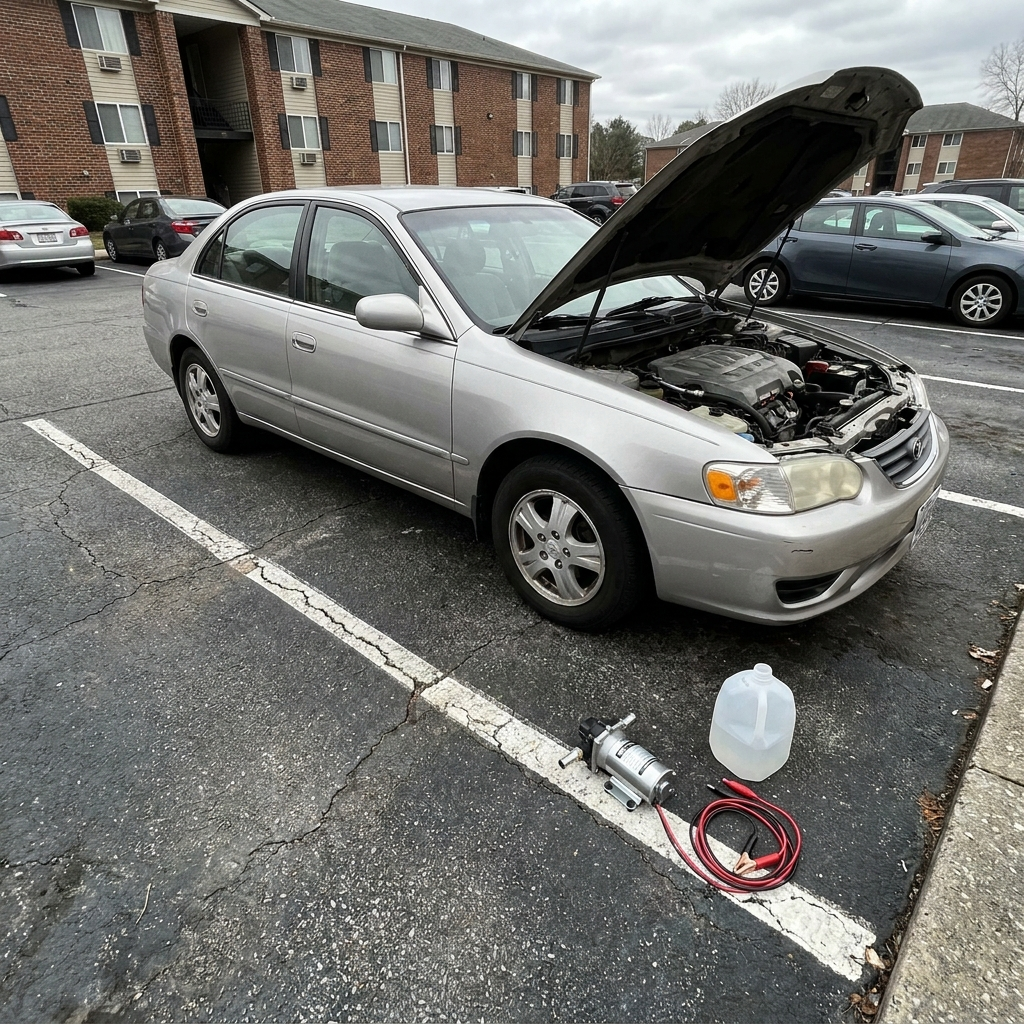
Two vehicles. One parking space. That's it.
No garage. No lift. No flat concrete pad I can leave a car sitting on for an hour with its wheels off the ground. Just a numbered space in a lot with a slight fall toward the drain in the middle.
Everything that used to be a Saturday morning turned into a negotiation.
Is the space flat enough for ramps. Is it going to rain. Do I have somewhere to put four quarts of black oil when it's out. Is somebody going to say something about the stain.
And every time the answer to one of those was no, the oil change moved to next month.
I never made it to the interval. Not once. Seven thousand if I was paying attention. Nine or ten if I wasn't. There was always something else. And there was always a reason not to today.
The thing I never said out loud
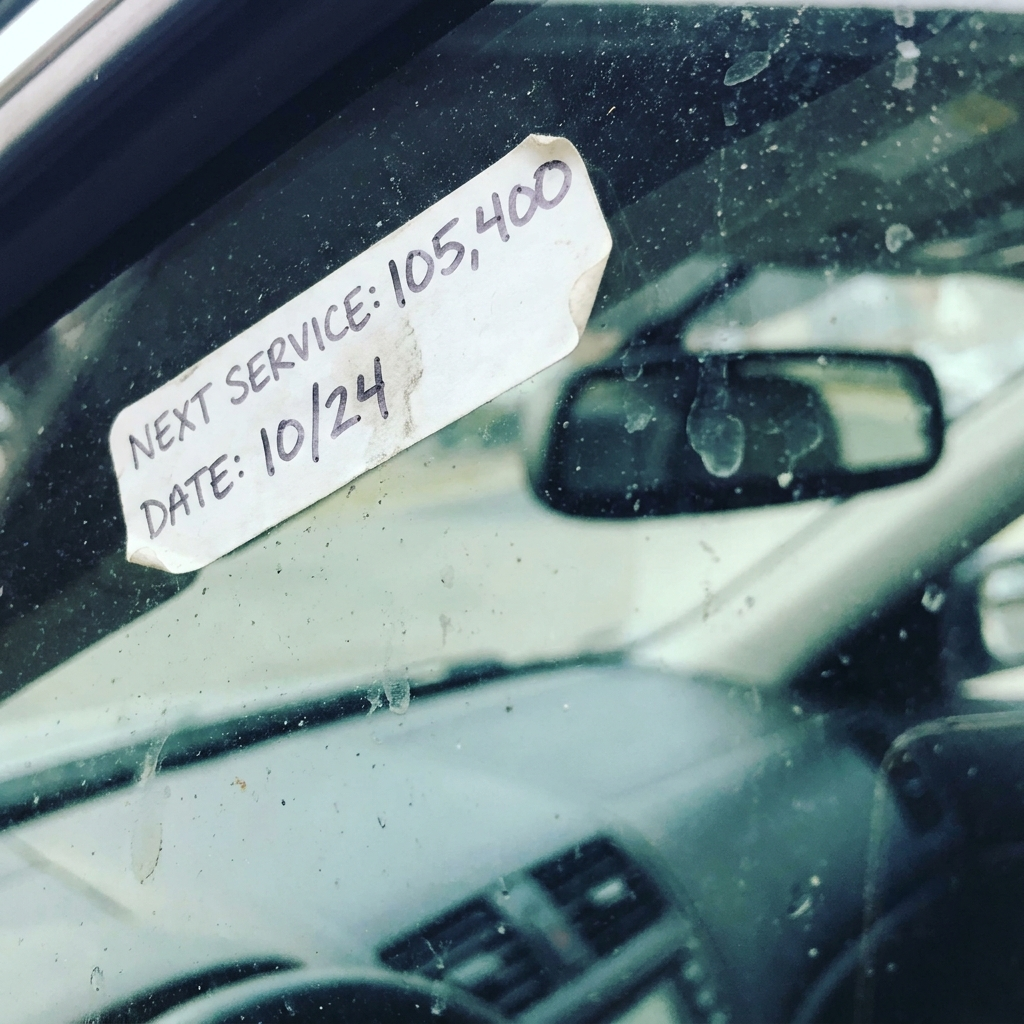
Every few months, same thought. Look at the sticker. Do the math.
"Four thousand miles past. How did that happen again."
You don't tell anybody that. It sounds like you can't manage something basic. Everybody's dad did this in a driveway with a socket set and a coffee can and never made it a whole thing.
I thought that for four years. Quietly.
Just figured everybody else was keeping up better than me.
What it was actually costing me
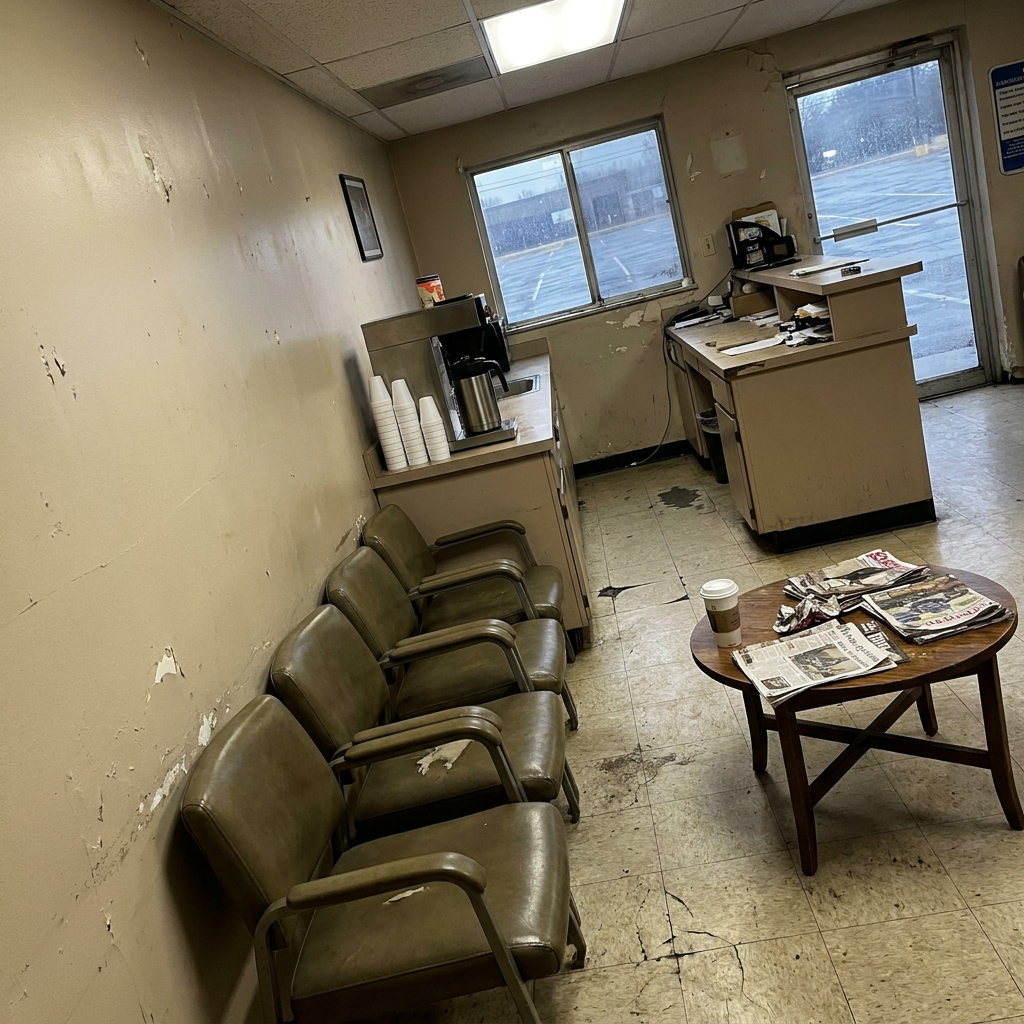
So I did what everybody does when the format beats them. I stopped changing my own oil.
Ninety-odd dollars for synthetic at the place down the road. More at the dealer. Two vehicles, twice a year.
But the money was never the worst part. The worst part was the half-day. Drop it off. Sit in the lobby. Take the call about the cabin air filter. Go back for it. That's a morning gone, four times a year, for a job I used to be able to do myself.
And underneath all of it, the one I'd been putting off for three years: the transmission fluid.
Because dropping a transmission pan in a parking lot was never going to happen. Not with a gasket to replace and four quarts of ATF looking for somewhere to go. The dealer quoted me three hundred and change.
So I kept driving on it. And every few months I'd think about it, and then think about the pan, and then not think about it.
Last spring, I stopped blaming myself
Last spring somebody in a truck forum said something that made me stop scrolling and read it twice.
"Stop counting the minutes. Count the setup."
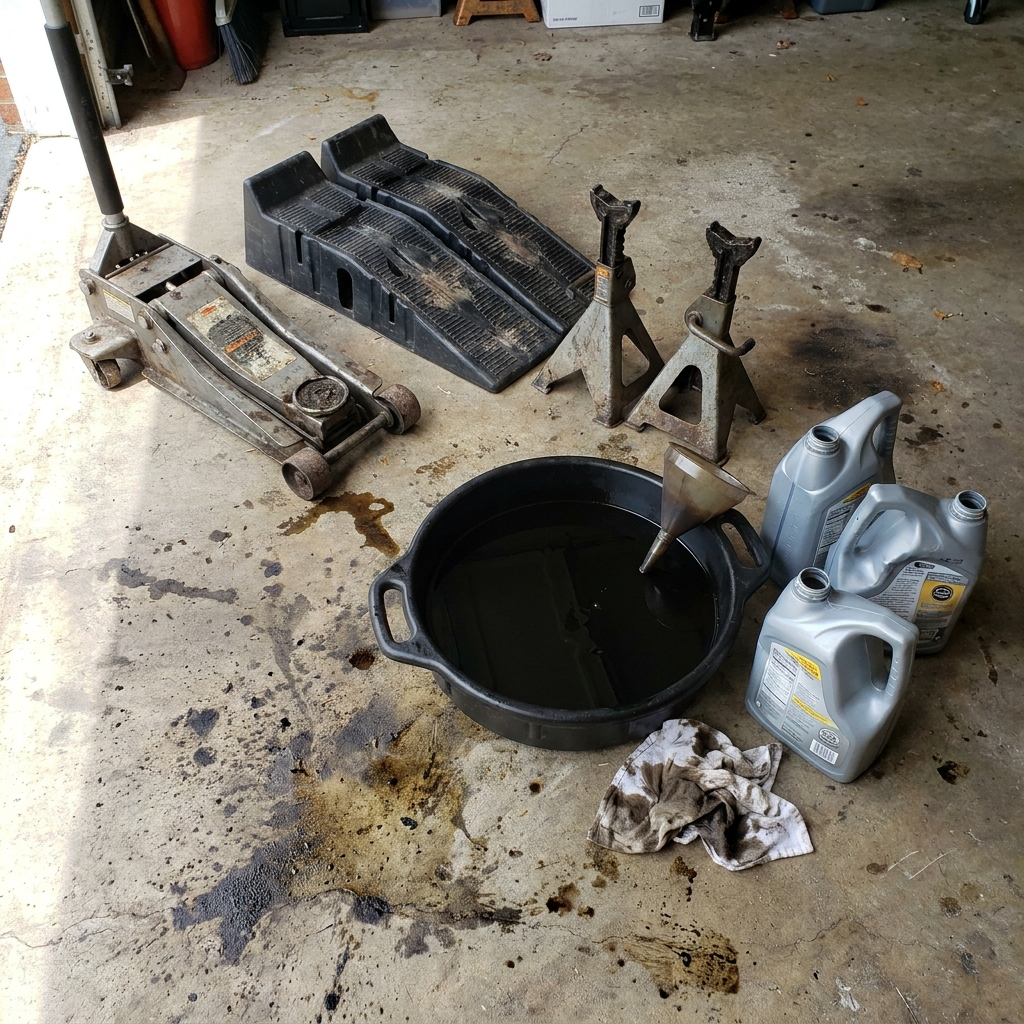
So I did. I sat down and wrote out an oil change. Not the part where you crack the plug — the whole thing.
Find a flat spot. Jack it. Stands under it. Change into clothes you're willing to ruin. Slide the pan under. Find the plug. Break loose a plug the last shop torqued down like it owed them money. Get your arm out of the way of what happens next. Wait. Filter. Plug back in, correct torque, new washer. Lower it.
Then pour four quarts of hot black oil out of an open pan, through a funnel, into a jug, without spilling any of it on a surface you have to keep living with. Then find somewhere that'll take it.
Twenty minutes of that is the actual oil change. The rest is the format.
The format was asking me for a half-day, a garage I don't have, a flat pad I don't have, and a set of clothes I'd have to throw out afterward.
I managed it twice a year for four years. Then I stopped doing it at all.
The oil was never the problem. The format it came in needed a version of me with a garage, a free Saturday and a back that doesn't complain.
That guy was never me. And I spent four years treating that like a character flaw.
So I stopped looking for a faster way to do it under the car. And I started looking for a way not to go under the car at all.
What I found wasn't better oil. It was a different direction.
I almost scrolled past it. A guy on the same forum said he'd stopped taking the drain plug out entirely — said he pulls his oil up through the dipstick tube instead.
I figured he was exaggerating. Everybody's got a shortcut that only works on their own car.
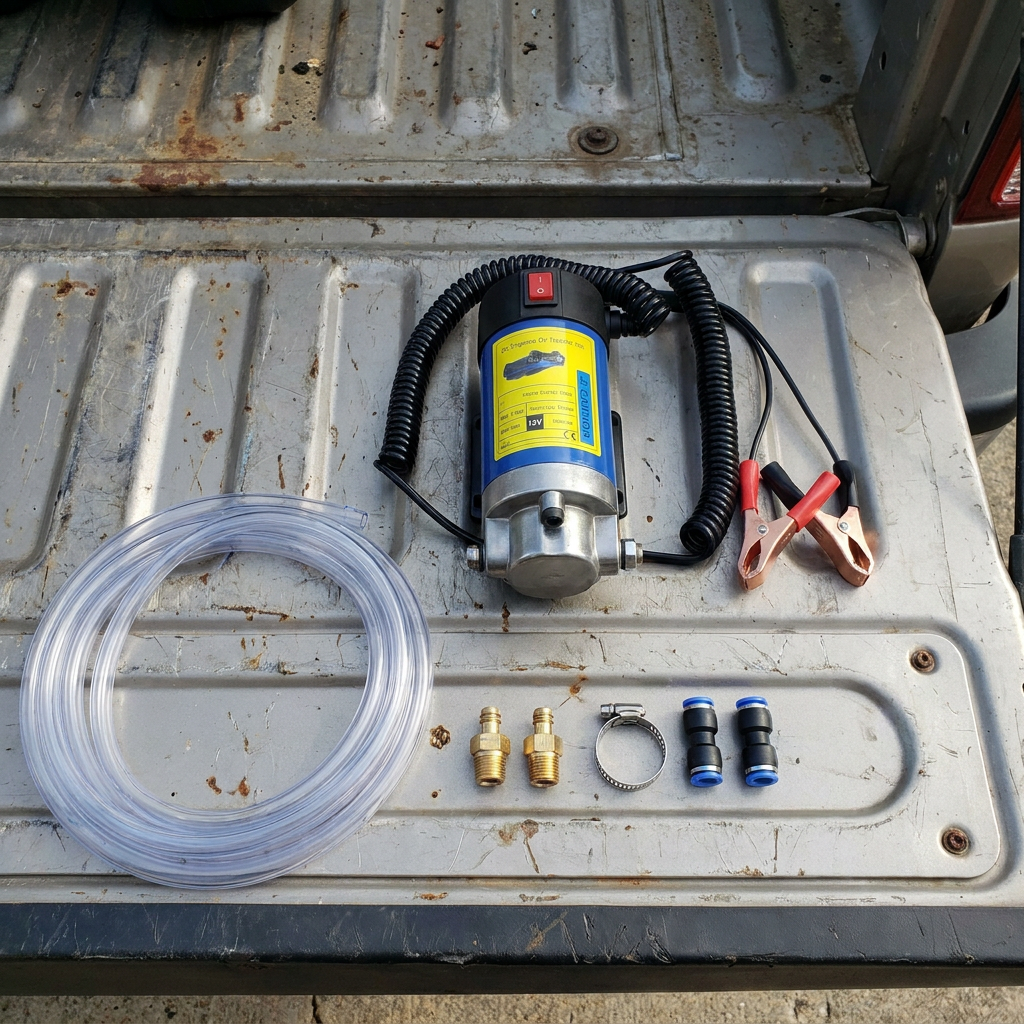
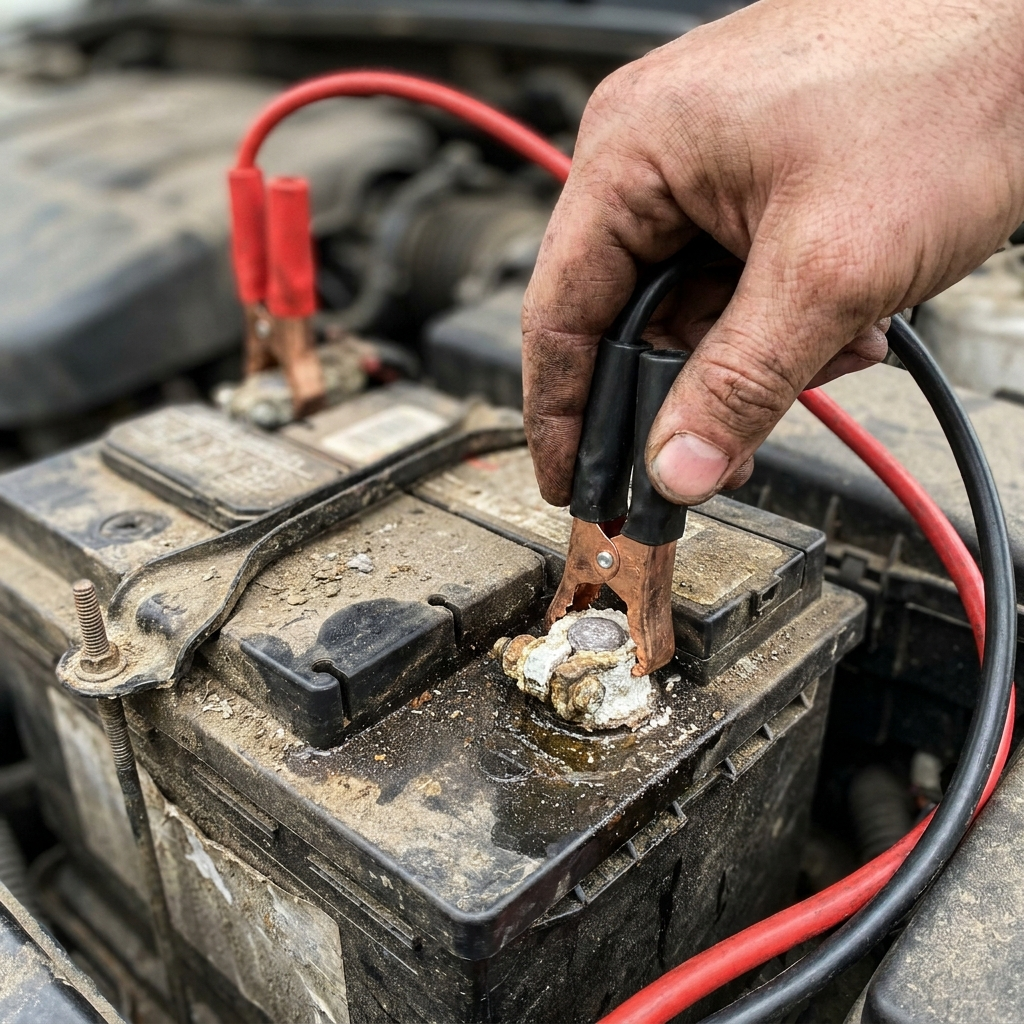
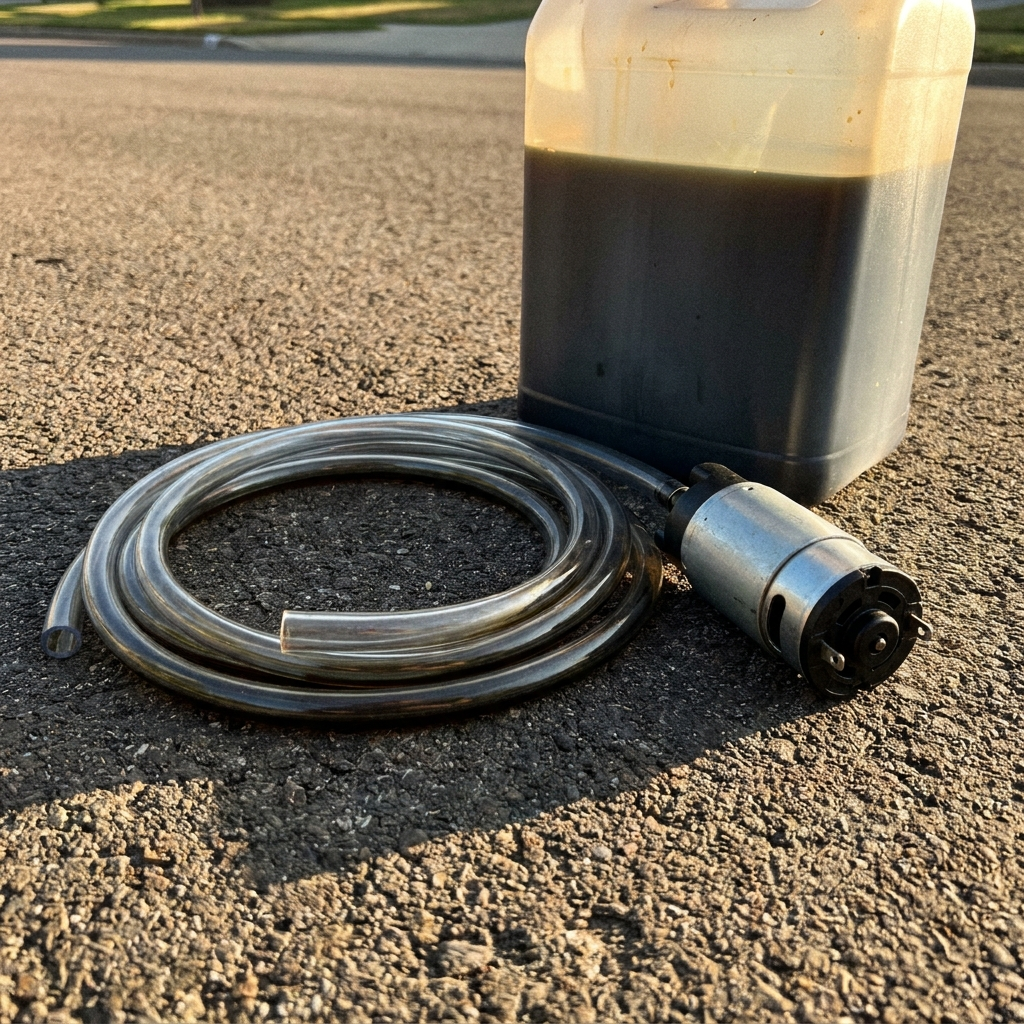
He wasn't. He was talking about an electric extractor pump. A 12-volt motor, a hose thin enough to feed down a dipstick tube, and two clips that go straight onto your battery terminals. No wiring, no adapter, no trip to town for parts.
It's called Drainless.
You use the same oil you already buy. The same filter. The only thing that changes is which direction the old oil comes out.
I ordered one. It turned up in a box about the size of a boot, with three hoses in it — a thin one for the dipstick tube, two thicker ones for everything else.
Warmed the engine up for five minutes. Fed the thin hose down the dipstick tube until it hit the bottom of the pan. Clipped the leads to the battery. Flipped the switch.
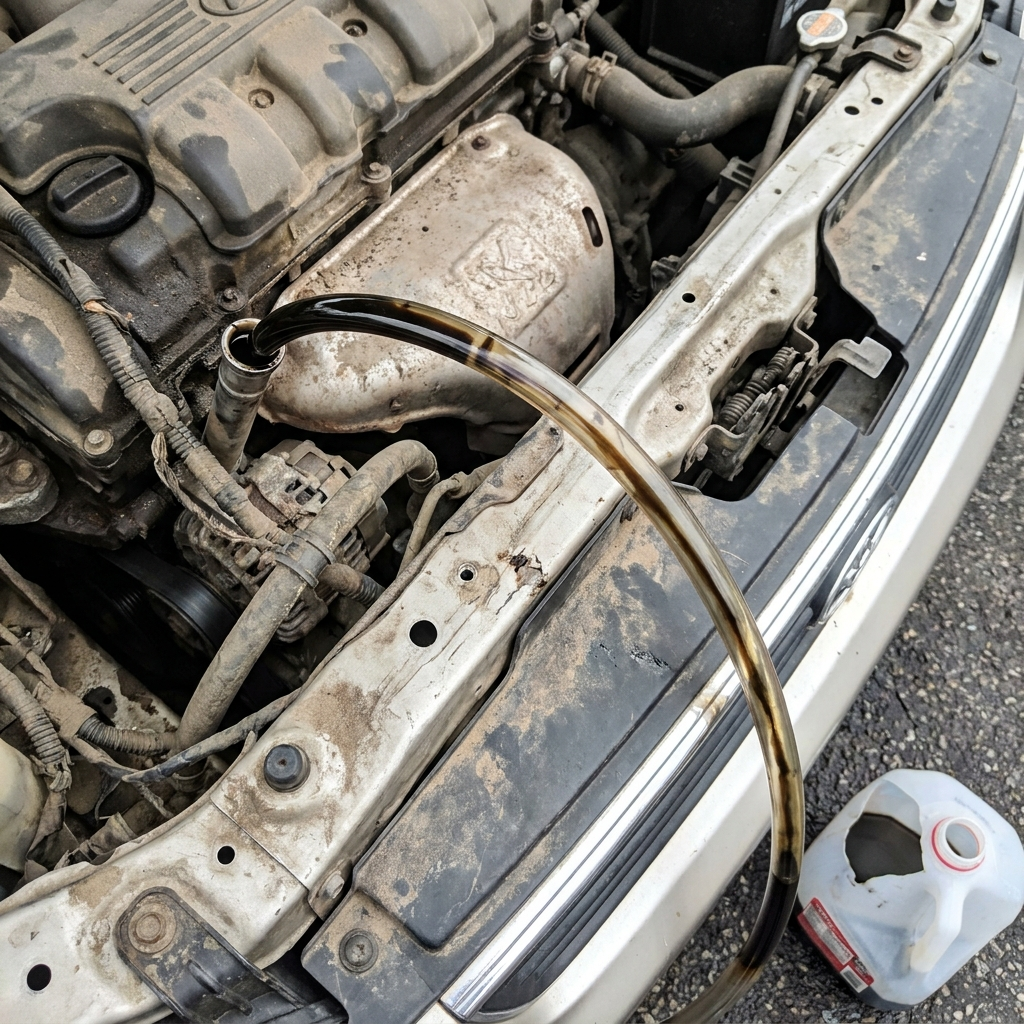
The oil climbed up the clear hose and went straight into the jug.
Not into a pan. Not through a funnel. Straight into the jug I was going to end up putting it in anyway.
I stood there in my parking space trying to work out what exactly I'd been doing for four years. No jack. No ramps. No stands. No flat pad. Never got on the ground, never got under anything.
Ten minutes. In the clothes I was already wearing.
The first time I didn't trust it. Then I did the transmission.
First time, I didn't believe it had actually worked. So I pulled the plug afterward just to see what it had left behind.
A little. Not much. Extraction gets most of what draining gets — feed the hose right down to the bottom of the sump and move it once as the level drops, and what's left is a splash rather than a pour. Draining still wins on the last few percent, and if that matters to you, pull the plug every second or third change and use the pump the rest of the time.
That was enough for me. It was never going to be about the last ounce. It was about whether the change happened at all.
Then in June I did the thing I'd been avoiding for three years. Pulled the ATF up the transmission dipstick tube, a few quarts at a time, refilled between passes, ran it, did it again. No pan. No gasket. No three hundred dollars.
Then I did the mower, which had never had its oil changed because tipping it over is a nightmare.
Then my brother-in-law's jet ski, which has no practical drain plug at all and had been sitting on a marina waiting list since April.
That's the part nobody tells you about. It isn't that the oil change gets easier. It's that all the jobs you'd quietly given up on start getting done — because none of them require getting under anything anymore.
One thing to do before you switch it on for the first time
This is the part that isn't on the box, and it's the single reason a lot of these pumps die inside the first minute. If you take nothing else from this page, take this.
The pump ships dry. The gears inside are aluminium running against aluminium, and there is no oil in there when it leaves the factory. Run it dry — even for a few seconds — and it can seize permanently.
Pour about a tablespoon of clean engine oil into the inlet port before you turn it on the first time. That's the whole trick. It takes ten seconds.
Two more while I'm at it, because they're the other two ways people kill these things:
Warm the engine first. Not hot — just run it for a few minutes until the oil is somewhere around 104–140°F. Cold oil is thick, thick oil stalls the motor, and a stalled motor cooks itself. This is also why it pulls faster in July than in February.
Watch the clock. Thirty minutes of continuous running is the duty cycle. That's four or five oil changes back to back, which is more than you'll ever need in one sitting. It is not a drum pump; don't ask it to empty fifty gallons.
Do those three things and it does the job. Skip the first one and you'll be the guy writing a one-star review about a pump that died in ten seconds. I've read a lot of those reviews. A lot of them are that.
You already know which side of this you're on
You keep doing what you've been doing. Ramps when you've got a flat spot and a free Saturday. The shop when you don't. Watch the sticker go three thousand miles past and tell yourself you'll get to it next month. Keep driving on transmission fluid you've never touched because the pan is a bridge too far.
Or you take getting under the car out of the equation completely. Ten minutes, standing up, in the space you already park in, wearing what you've already got on. Same oil. Same filter. Same interval you were supposed to be hitting all along.
And find out what your maintenance looks like when the format stops fighting you.
If it doesn't earn its place in your trunk, send it back. Thirty days, full refund. The risk sits with them, not you.